
There’s something incredibly comforting about stability. Knowing your bills will be paid, your fridge will be stocked, and you won’t be lying awake at night wondering if you can make rent—it’s the kind of security that brings a deep sigh of relief. For Pat, choosing accounting over writing brings that promise. It’s a path with clear steps, predictable outcomes, and a level of safety that feels almost like a guarantee.
But here’s the flip side—sometimes stability comes with its own kind of fear. It’s not the fear of not having enough, but the fear of getting too comfortable. Pat finds himself thinking about what it means to settle. Will the safe path keep him from taking chances later on? Will the steady paycheck make him forget the excitement of chasing something uncertain but meaningful? That quiet voice of doubt is always there, whispering when the days feel too repetitive or when he remembers the passion he set aside.
He starts to notice the little trade-offs. Yes, he has the security of a clear career track, but there’s less room for spontaneity. Yes, his parents are relieved and proud, but there’s a part of him that still wonders what could have been. Stability feels safe because it’s predictable, but that predictability can sometimes start to feel like a cage. It’s a strange mix of gratitude and restlessness that’s hard to explain to anyone who hasn’t felt it.
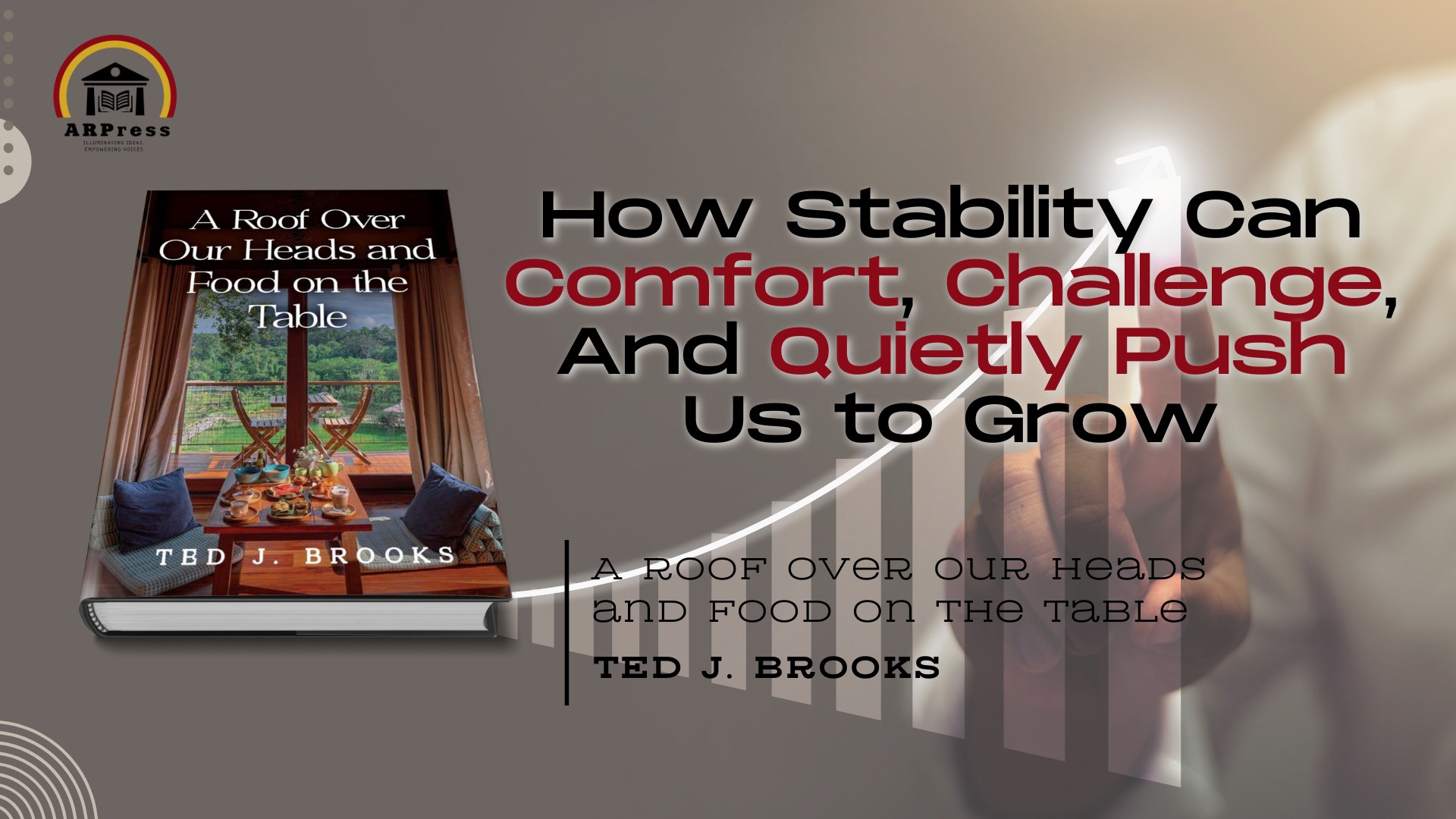
This tension between comfort and restlessness echoes one of the deeper themes in Ted J. Brooks’s A Roof Over Our Heads and Food on the Table. In the book, Brooks reflects on how the stability of having shelter and sustenance is both a blessing and a challenge. It grounds us, yes, but it also dares us to think about what lies beyond mere survival. Just like Pat weighing the trade-offs of his career, Brooks reminds us that stability should never mean complacency should be the launchpad from which we stretch toward new possibilities.
The irony is that stability can actually give you the freedom to explore—but only if you let it. Pat realizes that a steady career doesn’t mean his passion has to disappear entirely. It just means the timing for pursuing it will look different. Instead of rushing in headfirst, he can nurture it quietly, in the background, until the right moment comes.
In the end, Pat learns that stability isn’t the enemy of passion. It can be the foundation for it—as long as you don’t let comfort keep you from reaching for more when the time is right.
Stability may feel like a safety net, but when paired with courage, it becomes a springboard—one that allows us to dream bigger, take smarter risks, and build a life that balances both security and passion.
Visit Ted’s website at https://tedjbrooks.com/ to learn more about him and his books.
Purchase the book using this link: