

Why The Trials and Tribulations of Tin Can Lizzie Is More Than Just a Book, and Why Returnability Matters
There is something quietly affecting about a book that preserves a life not as legend, but as lived experience. The Trials and Tribulations of Tin Can Lizzie is such a work. It is more than a memoir; it is a testament to memory, resilience, family, and faith, told with care and emotional honesty.
Rather than presenting itself solely as a personal family history, the book reveals a deeper purpose as its story unfolds. Through the life of Elizabeth “Tin Can Lizzie” Seither, Dr. Colasent captures the realities of poverty, loss, survival, and endurance, particularly within the context of a family navigating extraordinary challenges. The story is grounded in real events, but its meaning reaches beyond one individual or one household.
The narrative unfolds through remembered conversations, family history, and reflections shaped by time and circumstance. Dr. Colasent does not attempt to polish or dramatize the past. Instead, she allows the story to remain human, sometimes painful, often reflective, and consistently sincere. The result is a portrait of a woman whose strength emerged not from ease, but from persistence in the face of repeated trials.
Time is the heart of the message; how it shapes lives, steals moments, and forces reckonings. Set against the backdrop of the COVID-19 pandemic, the story underscores how fragile connection can be and how easily opportunities for closure, understanding, and reconciliation can disappear. Loss, in this context, is not abstract. It is immediate and personal, experienced through unanswered questions and unfinished conversations.
Faith also runs quietly through the book, not as doctrine, but as grounding. The belief that trials can be endured, and that meaning can emerge even from suffering, gives the narrative its steady emotional footing. Dr. Colasent does not write to persuade, but to testify; allowing readers to draw strength from a life that continued forward despite limitations imposed by circumstance, health, and time.
One of the book’s greatest strengths is its honesty. The author does not shy away from complexity, regret, or imperfection. Instead, she presents a life as it was lived, shaped by choices, consequences, love, and survival. In doing so, the book becomes relatable to anyone who has carried family stories, navigated grief, or attempted to make sense of the past while moving forward.
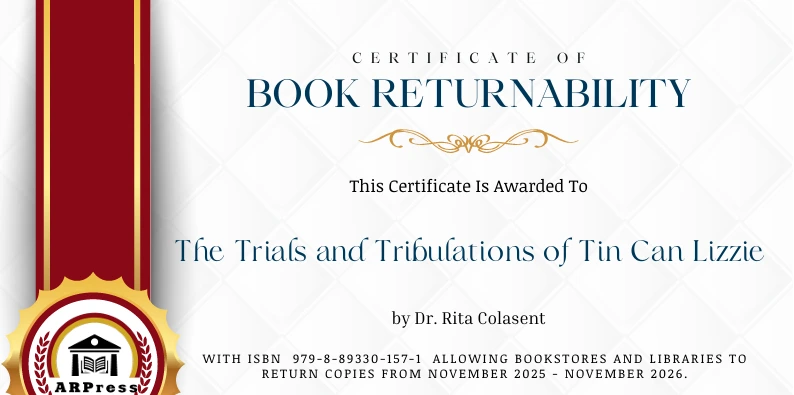
Beyond its content, there is an important practical element worth noting: the book’s returnable status. While often overlooked, returnability plays a crucial role in a book’s visibility. It allows bookstores to stock the title with confidence, giving readers the chance to encounter it organically. For a story rooted in remembrance and shared human experience, this accessibility matters. It ensures the book can reach readers who may not be searching for it, but who may deeply need it.
Symbolically, returnability aligns with the spirit of the book itself. The Trials and Tribulations of Tin Can Lizzie is, in many ways, about returning, to memory, to family history, to voices that might otherwise fade. It invites readers to pause, reflect, and consider how personal stories shape collective understanding.
Dr. Colasent does not present this book as a definitive account, but as a faithful one. It honors a life by telling it, and in doing so, preserves meaning for future generations. The book is not meant to be rushed. It is meant to be read thoughtfully, revisited, and remembered.
Because of its returnable status and its emotional sincerity, The Trials and Tribulations of Tin Can Lizzie stands a stronger chance of finding its place on bookstore shelves and in personal libraries. There, it waits, not simply to be read, but to remind readers that even ordinary lives, shaped by hardship and perseverance, carry enduring value.
The Trials and Tribulations of Tin Can Lizzie” by Dr. Rita Stupavsky Colasent is now available for purchase via ARPress Bookstore: