
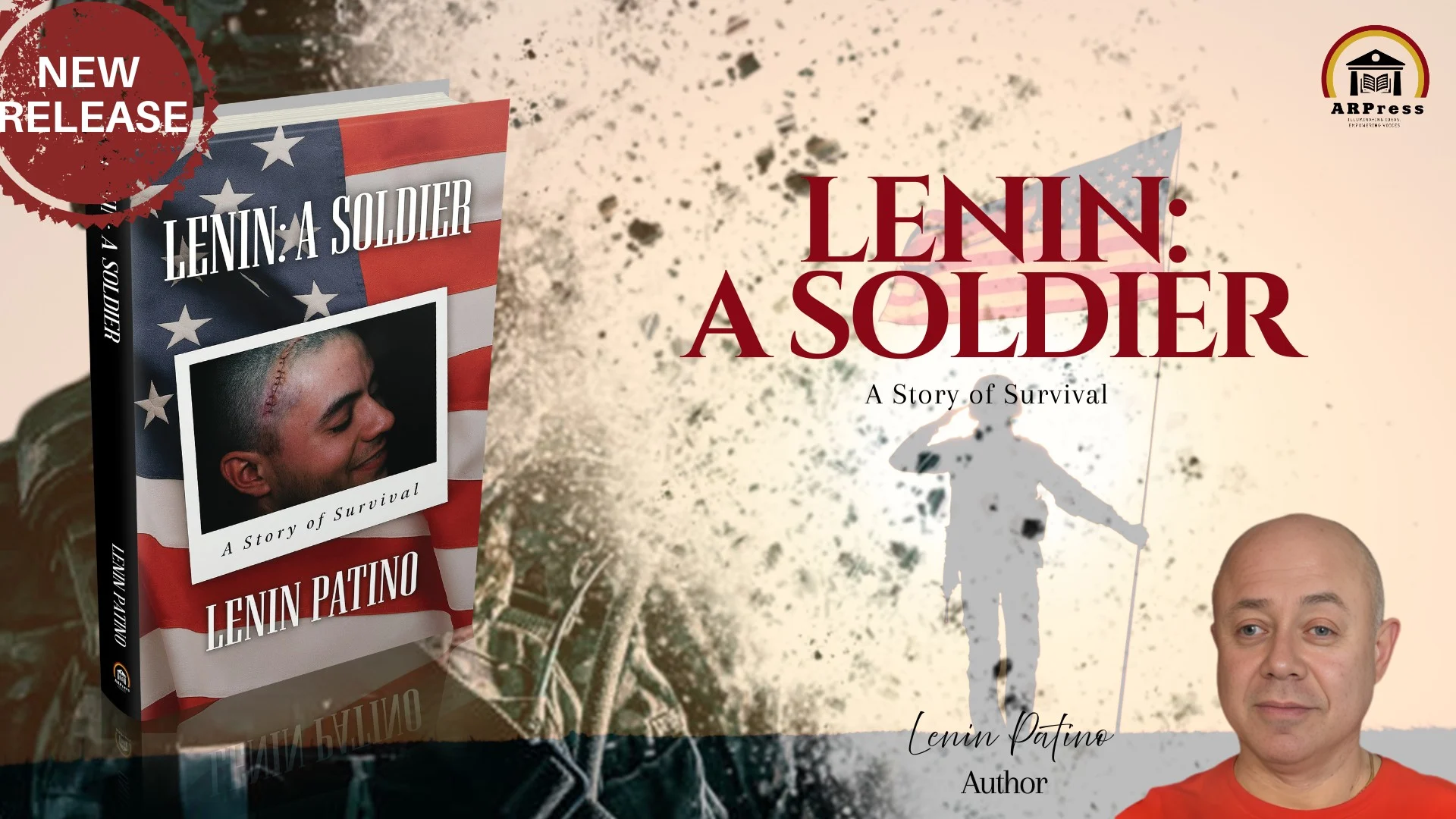
“The military wasn’t my first option, but it wasn’t just a way to earn college money without burdening my parents either. It was patriotic, honorable, and adventurous—physically demanding and rooted in discipline, requiring both physical and mental strength.”
– an excerpt from the book
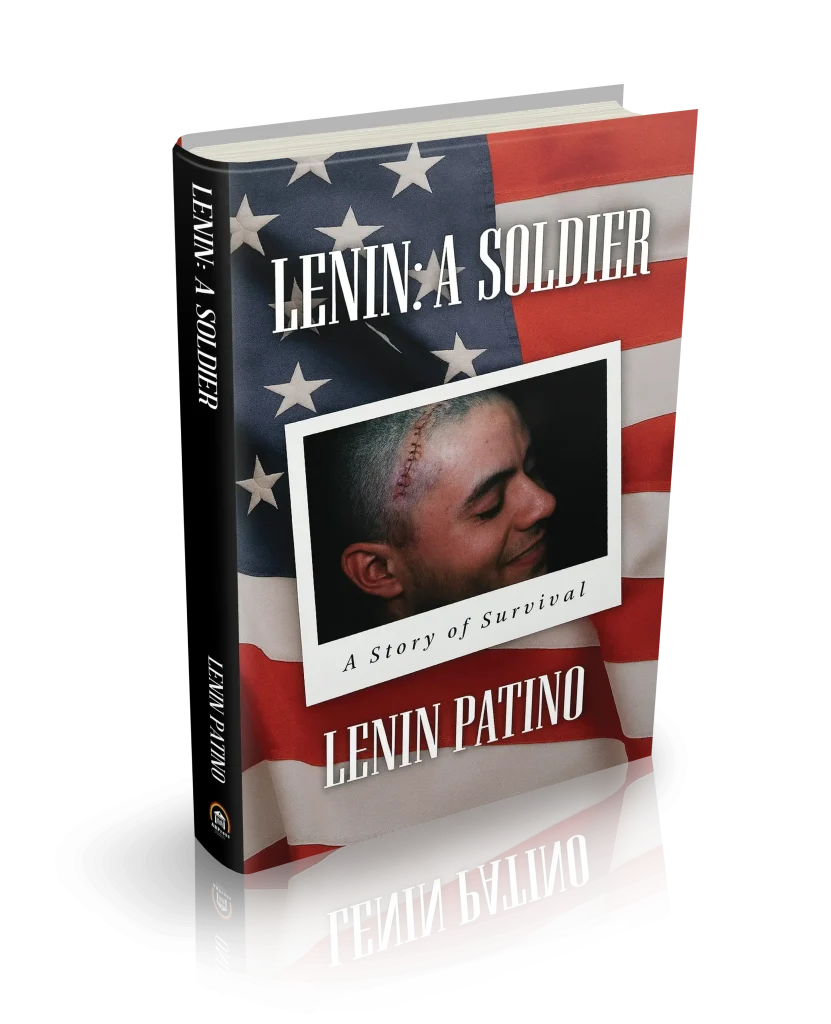
ARPress is honored to publish Lenin: A Soldier — A Story of Survival by Lenin Patino. This book is now available on Amazon, Barnes & Noble, and the ARPress website.
Life doesn’t usually announce itself when it’s about to change. It just shifts, quietly at first, almost politely, then all at once. One moment you’re worrying about small things, the next you’re standing in the middle of something you never saw coming, wondering how everything unraveled so fast.
That’s the strange thing about it. We move through our days thinking we’re in control, mapping out plans, making decisions that feel solid at the time. But life has a way of bending those plans, testing them, sometimes breaking them completely. And when it does, you don’t get to pause and think it over. You just react. You endure. You figure it out as you go, even when you have no idea what “figuring it out” is supposed to look like.
In Lenin: A Soldier — A Story of Survival, that idea sits at the center of everything. It’s not just about what happens, it’s about what happens after. The moments when things fall apart, and the quieter, harder moments where you have to decide whether you’re going to stay down or somehow push forward, even if forward feels impossible.
Because survival isn’t always loud or heroic. Sometimes it’s slow. Frustrating. Uncertain. It’s made up of small choices, stubborn thoughts, and the refusal, however faint, to give up completely.
And maybe that’s the point. Life doesn’t ask if you’re ready. It just keeps going. The real question is whether you do too.
Author Lenin Patino was born in Colombia and raised in Southern California. Now in his late forties, he has lived in multiple places and has faced many ongoing health struggles. Despite these challenges, he is very content with his life. He currently resides in Santa Clarita, a suburban city near Los Angeles, with his wife and two adult children in the same house where they grew up, along with some close friends.
He spends most of his day in front of the computer trading stocks and options, as well as writing. He also enjoys watching sports. Lenin finds great pleasure in helping others and believes that something positive can be attained from every situation and that there is nothing that cannot be overcome. He has learned that life gives us many opportunities that are disguised as challenges and that very often the most challenging path will be the most rewarding.
There’s something a little disarming about this book right from the start. The author, Lenin Patino, opens by joking about his name, not that Lenin, he says, and it kind of sets the tone. It’s casual, a bit self-aware, not trying too hard. You get the sense pretty quickly that he’s just… telling it how he remembers it, not polishing it into something overly literary.
The book itself reads like someone sitting across from you, maybe at a kitchen table, going, “Alright, here’s what happened,” and then just diving in. It starts with his life as a teenager in California, sports, not great grades, a lot of uncertainty, and there’s no attempt to make himself look better than he was. If anything, he admits where he messed up. That part feels honest in a way that’s hard to fake. He’s not trying to be inspirational yet. He’s just… a kid figuring things out, kind of badly.
Then the military comes in, almost like a practical decision more than some big patriotic calling. And the way he talks about it, meeting recruiters, getting annoyed, weighing options; it’s oddly relatable. Not dramatic, just real. He doesn’t frame it as destiny. It’s more like, “This seems like the best option I’ve got right now,” which, honestly, makes everything that follows hit harder.
Once he gets into basic training, the tone shifts a bit. It’s still conversational, but there’s more intensity creeping in. He describes the chaos, the exhaustion, the weird mix of camaraderie and frustration. Some moments are rough; some are almost funny in hindsight. He doesn’t over-explain them either. He just drops you into the scene and lets it sit there. You can almost feel the confusion and adrenaline without him needing to spell it out.
And then, this is where the book really stops feeling like a typical memoir, everything changes. The shooting. It’s sudden, messy, and honestly kind of shocking how bluntly it’s told. No dramatic buildup. Just a bad decision, a moment that shouldn’t have happened, and then… everything after.
What follows is probably the most striking part of the book. His experience in the hospital, drifting in and out of consciousness, aware but unable to move, is unsettling in a quiet way. He doesn’t try to make it poetic. It’s more fragmented, almost like his thoughts at the time. There’s fear, confusion, a bit of dark humor even. And somehow that makes it more believable. It doesn’t feel like a story being shaped for effect. It feels like someone trying to explain something that didn’t make sense even while it was happening.
As an author, Patino isn’t overly polished. You’ll notice it. The sentences can run long, the structure isn’t always tight, and sometimes he repeats himself. But weirdly, that works in his favor. It keeps the voice intact. You don’t feel like an editor scrubbed out the personality. It’s raw in places, a little uneven, but also more human because of that.
And maybe that’s the thing. The book isn’t trying to impress you with style. It’s trying to tell you what it felt like to go through all of this, to make mistakes, to survive something that should’ve killed him, and to somehow piece together a life afterward. It doesn’t wrap everything up neatly. It just… keeps going, the same way he did.
It’s not perfect. But it doesn’t need to be. That’s kind of the point.
Lenin: A Soldier — A Story of Survival by Lenin Patino is now available for purchase via the ARPress Bookstore.