

“We’ve started the ball rolling and if he’s still with us, he’ll do his part. He wouldn’t want you to quit now! We’re here to make a difference. We’re here to prove all those people who have died over the years did not die in vain…”
– an excerpt from the book
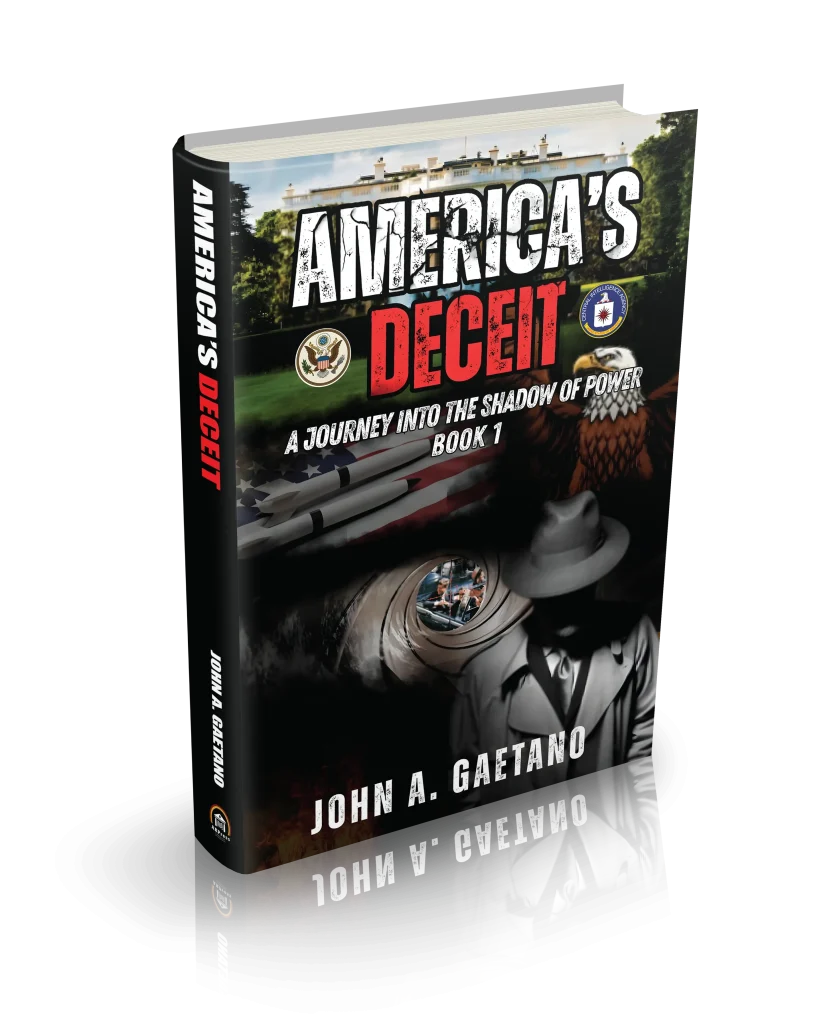
ARPress is honored to publish America’s Deceit: A Journey into the Shadow of Power (Book 1) by John A. Gaetano. This book is now available on Amazon, Barnes & Noble, and the ARPress website.
Some moments split a life in two. A headline. A gunshot. A truth you thought was solid suddenly shifting under your feet. Most people don’t notice it happening at first, the quiet realization that the story they were told might not be the whole story. That uneasy feeling, the one that lingers long after the news cycle moves on, is exactly where America’s Deceit lives. It speaks to that instinct we all have, the one that whispers to look closer, to question louder, to refuse the comfort of easy answers when something deeper doesn’t sit right.
Author John A. Gaetano was eleven years old when President John F. Kennedy was assassinated. The event left a permanent impression, fueling his lifelong pursuit of truth behind government secrecy. He spent years researching declassified files, political archives, and firsthand testimonies to uncover the intricate links between power and deception in America’s modern history. In America’s Deceit, Gaetano blends historical fact with pulse-pounding fiction, creating a narrative that challenges readers to question everything they’ve been told. He currently resides in the United States, continuing his research for the next installment of the Shadow of Power series
There’s something almost stubborn about America’s Deceit. It doesn’t tiptoe around its subject. It doesn’t politely suggest a theory and move on. It leans in, lowers its voice, and says: No, really. Look closer.
Written by John A. Gaetano, the novel takes on one of the most dissected events in American history, the assassination of President John F. Kennedy, and treats it not as settled history, but as an open wound. For Gaetano, this isn’t just material for a thriller. It’s personal.
He was eleven years old when Kennedy was killed. Eleven. That kind of moment brands itself onto a person. You can almost picture it: a kid watching the adults in the room go quiet, seeing something shift in their faces. That early shock clearly never left him. Decades later, it’s still there, simmering beneath the pages of this book.
And make no mistake, America’s Deceit simmers.
The story follows a Pulitzer Prize–winning photojournalist who has spent years repeating the official narrative, backing the lone gunman theory. Then something happens. Information surfaces. Threads unravel. The man who once defended the government’s version of events starts pulling at it instead. That shift, from certainty to doubt, is really the engine of the novel.
Gaetano blends fact with fiction in a way that feels deliberate, sometimes even provocative. He references real historical players like James Garrison, who famously challenged the official findings, and nods to cultural flashpoints like JFK, the film by Oliver Stone that stirred up national debate in the early ’90s. The book moves through political corridors, intelligence agencies, campaign headquarters, and shadowy backrooms with a kind of restless energy. It doesn’t feel distant. It feels… close.
Maybe uncomfortably close.
One of the more striking things about Gaetano’s writing is that it doesn’t read like someone hedging his bets. He’s not neutral. He’s not coy. In his forewords and notes, he openly questions the Warren Commission, intelligence agencies, and the phrase “national security” itself. He circles around themes of secrecy, power, and manipulation, sometimes angrily, sometimes almost mournfully. There’s a sense that he’s been carrying these thoughts for years and finally decided to put them on paper, no matter who disagrees.
That intensity spills into the narrative. Characters don’t just chase clues; they risk their lives. There are sudden deaths, missing files, hushed phone calls, and the ever-present suggestion that someone, somewhere, is watching. It has the bones of a political thriller, sure, but it also reads like a man trying to reconcile decades of research, conversations, and suspicions.
Gaetano’s background adds another layer. He’s spent years researching declassified documents, political archives, and firsthand accounts. He also has ties to the film industry, and you can feel that cinematic influence. Scenes unfold visually. Dialogues have that sharp, back-and-forth rhythm. You can almost hear the tension in certain exchanges. It wouldn’t be surprising if this story started as a screenplay in his head.
What makes America’s Deceit stand out, though, isn’t just the conspiracy angle. Plenty of books tackle that. It’s the emotional undercurrent. Gaetano writes like someone who genuinely believes something vital has been hidden from the American public, and that uncovering it matters. Not in a flashy, headline-grabbing way. In a moral way.
He dedicates the book to members of the Kennedy family. He quotes scripture. He thanks mentors from old Hollywood. It’s an unusual mix: politics, faith, cinema, personal memory, but somehow it holds together. Imperfectly at times, yes. Passion can get messy. But that’s also what makes it feel human.
Reading America’s Deceit isn’t a passive experience. It asks the reader to question, to doubt, to connect dots. It assumes you’re paying attention. Whether you agree with Gaetano’s perspective or not, it’s hard to deny the conviction behind it.
And maybe that’s the point.
This isn’t a book written from a place of detached analysis. It’s written from a place of long-held belief. From the mind of someone who watched history fracture at eleven years old and never quite accepted the neat version that followed.
Love it or argue with it; either reaction means it did its job.
America’s Deceit: A Journey into the Shadow of Power (Book 1) by John A. Gaetano is now available for purchase via the ARPress Bookstore.