
Walking Your Own Road with Confidence
It’s natural to compare your journey to someone else’s. You look at classmates landing dream internships, friends taking bold career risks, or people your age already living the life you thought you’d have by now. Pat feels this pull too, especially when he thinks about the writing career he put on hold to pursue accounting. But over time, he learns something important: pride in your path doesn’t come from matching someone else’s timeline, it comes from owning the choices you’ve made.
At first, it’s a struggle. Pat wonders if taking the “safe” route makes him less ambitious or less brave. But the more he lives it, the more he sees the value in the stability he’s building. He’s paying his bills. He’s learning practical skills. He’s gaining experiences that will serve him in ways he can’t yet predict. These things might not look as glamorous as chasing a dream full-time, but they’re real achievements that deserve recognition.
Pride starts to grow in small, unexpected moments. Like when he helps a coworker balance the register without breaking a sweat. Or when he explains a tricky accounting concept to a classmate and watches it finally click for them. Or even when he looks around his dorm and realizes he’s managing his own life better than he thought possible a year ago. These aren’t the moments he imagined when he pictured his future, but they’re still worth being proud of.
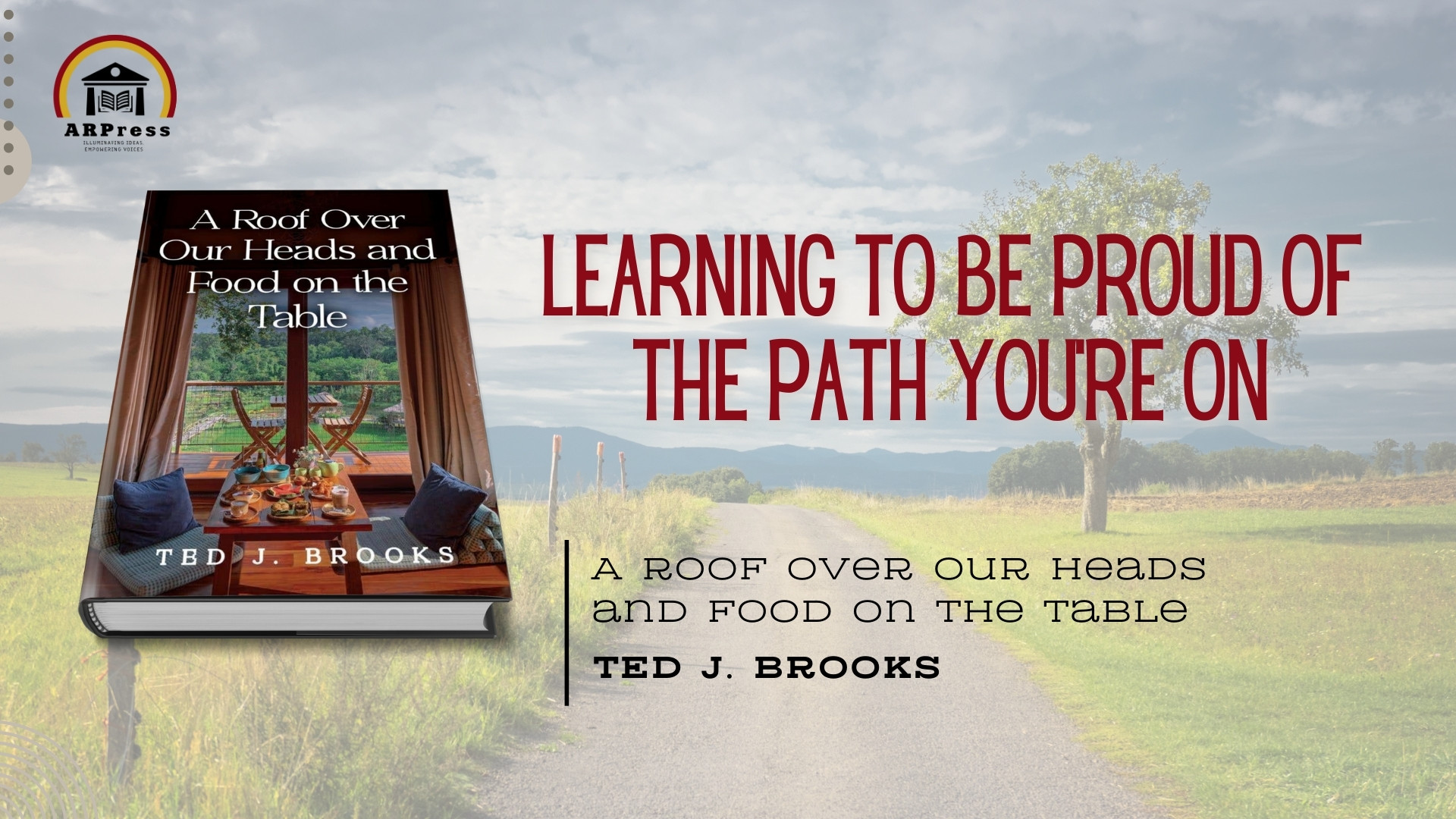
This theme also echoes in Ted J. Brooks’s book A Roof Over Our Heads and Food on the Table, where he reflects on the dignity of building a life step by step, even when it doesn’t look like someone else’s version of success. Brooks shows that there is pride in providing, in staying consistent, and in honoring the choices that keep your family secure. Just as Pat learns to appreciate his own decisions—trading the unpredictability of a writer’s path for the steadiness of accounting—Brooks demonstrates that fulfillment comes not from chasing every dream recklessly, but from building something lasting with intention. Both remind us that pride is not about comparison, but about integrity in the path you choose.
Pat also starts to understand that his path is just that—his. It doesn’t have to look like anyone else’s to be valid. He can still write. He can still dream. But he’s also allowed to find fulfillment in the choices he’s made so far, even if they weren’t the ones he expected to make. That realization takes the edge off the comparisons and replaces it with gratitude for where he is right now.
The comparisons don’t fully disappear, of course, but they lose their power. Pat comes to see that every person’s journey is a mix of risks, sacrifices, and compromises. The only difference is that his choices fit his circumstances, his priorities, and his values. And once he accepts that truth, he begins to notice something freeing: he’s not falling behind—he’s simply walking his own road, at his own pace. In the end, learning to be proud of your path is less about proving yourself to others and more about honoring the road you’ve chosen.
Your journey doesn’t need to look like anyone else’s to have meaning. If it’s shaping you, grounding you, and moving you forward, then it’s worth being proud of—because it’s yours.
Visit Ted’s website at https://tedjbrooks.com/ to learn more about him and his books.
Purchase the book using this link: