
Why Consistency Matters More Than Motivation
There’s a certain kind of discipline that comes from showing up on the days you really don’t want to. It’s not glamorous, and it doesn’t get celebrated much, but it’s one of the strongest habits you can build. For Pat, this plays out over and over—dragging himself to early classes after late shifts at Delacroix’s, finishing assignments when he’s already exhausted, and clocking in to work when all he wants is a night off.
At first, it feels like drudgery. There’s no immediate payoff, no applause for doing what you’re supposed to do. But over time, Pat notices something changing in himself. Each time he pushes through the resistance, he’s proving to himself that he can. He’s building trust with himself—trust that he’ll keep going, even when it’s inconvenient, even when it’s uncomfortable.
It’s in those moments that he realizes motivation isn’t what gets you through. Motivation is fickle—it comes and goes based on mood, energy, and circumstances. What really carries you is consistency, the quiet commitment to follow through whether you feel like it or not. That’s the muscle Pat is developing, and it’s one that will serve him far beyond his college and grocery store days.
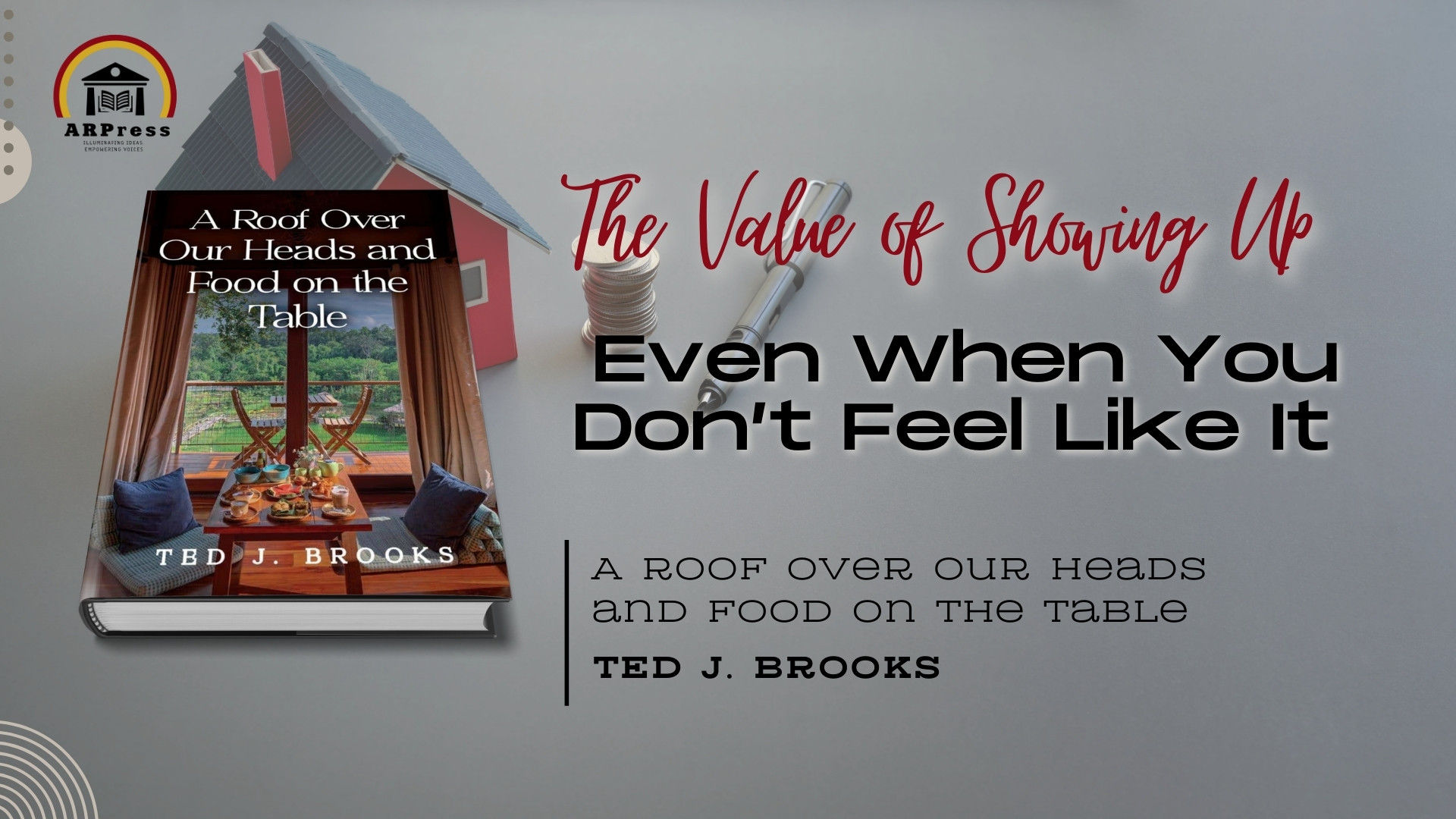
This lesson is echoed in Ted J. Brooks’s A Roof Over Our Heads and Food on the Table, where the theme of persistence in everyday life runs deep. Brooks highlights how stability, responsibility, and the determination to keep showing up—even when exhausted or discouraged—are what create a life of dignity and security. Just like Pat, who learns that consistency builds self-trust, Brooks reminds us that the foundations of family, work, and faith are often strengthened in the quiet, unseen moments when we simply do the hard thing because it needs to be done.
Of course, there are limits. Showing up doesn’t mean burning yourself out completely, and Pat has to learn when to push and when to rest. But he starts to see the value in being dependable—not just to others, but to himself. There’s a kind of pride in knowing you can count on yourself to do the hard thing, even when it’s tempting to take the easy way out.
By the time he looks back on this stage of his life, Pat realizes that the habit of showing up has become one of his most valuable assets. It’s not just about work or school—it’s about life. Because if you can keep moving forward on the hard days, the good days become that much more rewarding.
At the end of the day, success rarely comes from grand bursts of motivation—it comes from the quiet, steady act of showing up. Even when you’re tired. Even when you’d rather not. Because every time you do, you’re not just getting through a task—you’re shaping the person you’re becoming.
Visit Ted’s website at https://tedjbrooks.com/ to learn more about him and his books.
Purchase the book using this link: