
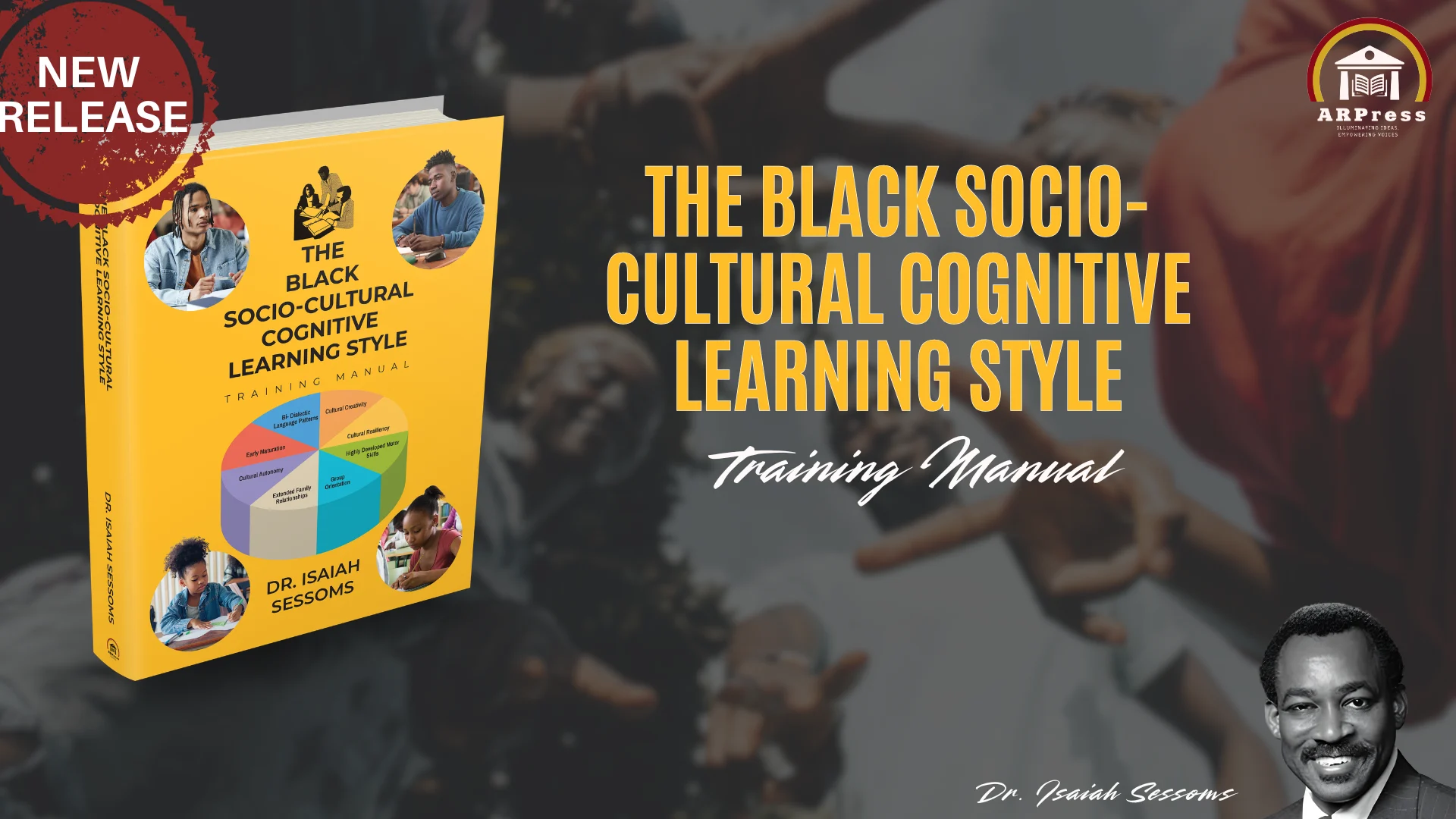
“Learning requires that very specific and complex cognitive skills be acknowledged before the process of learning actually takes place. Learning is a cooperative effort between the teacher and the student. Most teachers are familiar with cognition, as presented by Jean Piaget, but most fail to incorporate this important information into their teaching style. As a result, valuable time is lost in trying to force children to respond appropriately to specific curriculum and classroom activities. When they fail to do so, these children are labeled illiterate, lazy and slow learners.”
– an excerpt from the book
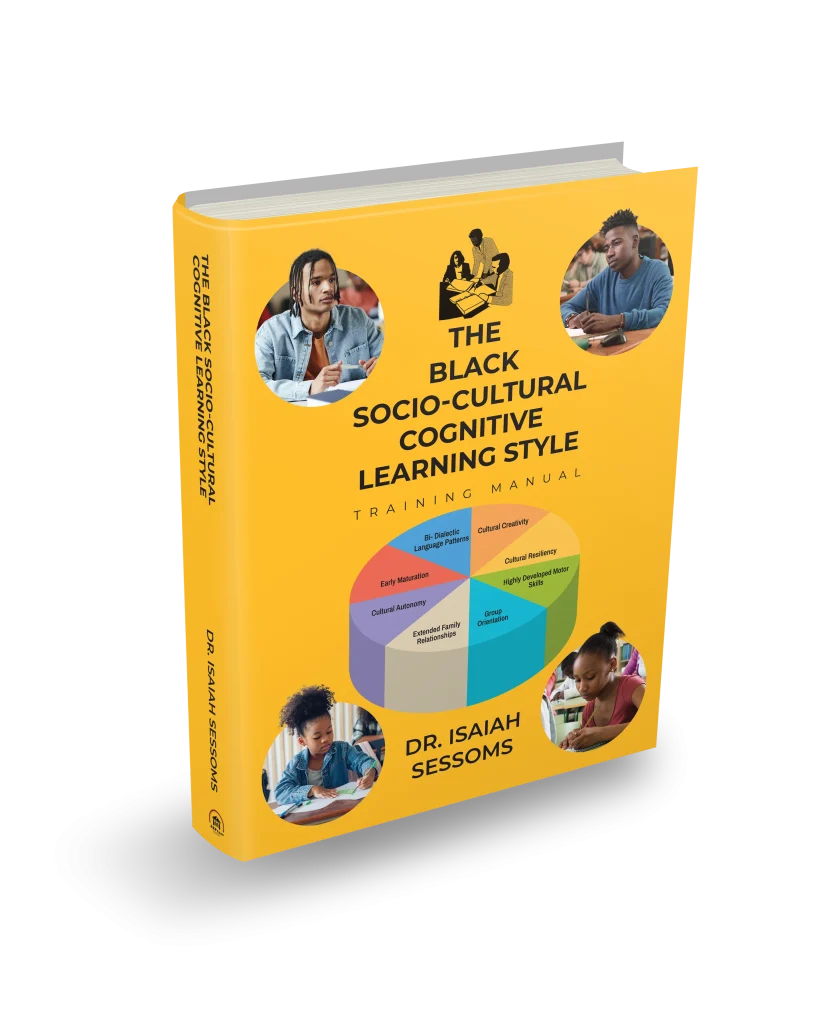
ARPress is honored to publish The Black Socio-Cultural Cognitive Learning Style: Training Manual by Dr. Isaiah Sessoms. This book is now available on Amazon, Barnes & Noble, and the ARPress website.
There are seasons in life when people move through the world almost on autopilot. Wake up. Work. Survive. Repeat. And somewhere in between all of that, children are trying to figure out who they are, how they learn, and whether the world around them even sees them clearly. Some kids walk into classrooms carrying curiosity. Others walk in carrying history, pressure, noise from home, pride, fear, culture, resilience. Usually all at once.
That’s part of what makes The Black Socio-Cultural Cognitive Learning Style feel so important, even decades after its original ideas were introduced. The book doesn’t treat learning like a cold, mechanical process. It treats children like actual human beings shaped by family, environment, language, culture, and lived experience. Honestly, that sounds obvious now. But education systems have spent years pretending everybody learns the exact same way if they just “try harder.”
Dr. Isaiah Sessoms pushes against that idea with real conviction.
Dr. Sessoms has enjoyed a long and distinguished career in education. He earned his Ph.D. from Cornell University in 1975, specializing in Curriculum Design and Educational Psychology. Prior to that, he received his M.A. in Education from California Lutheran University and his B.A. from Kentucky State University. Following the completion of his doctoral studies, Dr. Sessoms pursued postdoctoral work at the University of Washington, where he focused on cognitive learning styles.
Throughout his career, Dr. Sessoms has served in a wide range of educational roles, including teacher, counselor, mentor, advisor, administrator, instructor, and professor. For more than 15 years, he served as Director of the ACT 101 Program at Clarion University of Pennsylvania and later chaired the university’s Academic Support Division for four years. During his tenure at Clarion, he was promoted to the rank of full professor.
As an educator, Dr. Sessoms has contributed at every level of academia, from the classroom to executive leadership. His experience spans both traditional and experimental degree-granting programs, distance-learning institutions, and academic advising for adult learners.
The book reads less like a trendy education manifesto and more like a serious attempt to make teachers stop and actually look at the students sitting in front of them. Not just their grades. Not just behavior reports. The students themselves.
One thing that stands out immediately is how direct Sessoms is. There’s no dancing around the topic. He argues that public education has historically ignored the cultural realities and learning styles of African American students, and he doesn’t soften that point to make it more comfortable. Some readers will probably feel challenged by that honesty. Others might feel relieved somebody finally said it plainly.
What makes the book interesting, though, is that it doesn’t stay stuck in criticism. It moves into solutions, observations, teaching strategies, and cognitive theory. The manual digs into how family structures, cultural identity, environmental pressures, creativity, language patterns, and even movement affect the way children process information and interact with school. It’s layered. Sometimes surprisingly layered.
There are moments where the writing feels academic, sure. This is definitely a training manual in many ways. But underneath the educational terminology is a very human argument: children learn better when they feel understood instead of judged.
That message lands harder now than ever.
Sessoms spends a lot of time discussing the strengths African American students bring into the classroom rather than framing them through deficits. That shift matters. A lot of educational conversations, especially older ones, focused almost entirely on what Black students supposedly lacked. This book flips that perspective around. Creativity becomes intelligence. Adaptability becomes cognitive strength. Cultural identity becomes something valuable instead of something to suppress.
And honestly, some sections feel surprisingly ahead of their time.
The discussions around bilingual language patterns, environmental awareness, group orientation, and culturally responsive teaching sound connected to conversations educators are still having today. The book may have originated years ago, but the larger debate around equity in education clearly never disappeared.
As an author, Dr. Isaiah Sessoms comes across as deeply invested in both research and lived reality. There’s frustration in the writing sometimes. Also urgency. The sense that he wrote this because he was tired of watching students be misunderstood by systems that claimed to serve them. That emotional undercurrent gives the book weight. It doesn’t feel detached from the people it’s talking about.
And maybe that’s why the book stays with readers.
It asks uncomfortable questions without trying to perform intellectual gymnastics. Why are certain learning styles rewarded while others are dismissed? Why does culture suddenly become “irrelevant” once a child enters a classroom? Why are some students labeled difficult when they may simply be responding to an environment that was never designed with them in mind?
Heavy questions, honestly. Necessary ones too.
The book also deserves credit for being practical. It includes observational tools, teaching exercises, curriculum strategies, assessment instruments, and classroom applications instead of stopping at theory. That makes it useful not only for educators, but for parents, counselors, and people trying to better understand how identity shapes learning.
Not every reader will agree with every conclusion in the book. That’s normal. But it’s hard to deny the passion behind it.
In a strange way, the heart of the book isn’t really about education alone. It’s about recognition. About what happens when children feel invisible inside institutions that are supposed to help them grow. And on the other side of that, what becomes possible when somebody finally pays attention to the way they already experience the world.
That idea lingers long after the final page.
Because most people remember the teachers who understood them. The ones who saw ability before failure. Potential before stereotypes. Those teachers can change the direction of a life without even realizing it.
Books like this seem to believe that kind of change is still possible.
The Black Socio-Cultural Cognitive Learning Style: Training Manual by Dr. Isaiah Sessoms is now available for purchase via the ARPress Bookstore.