
When we talk about belief, whether in Santa Claus as children or in God as adults, we inevitably come face to face with questions about reality. Do we all live in the same world, or is each of us trapped in our own private version of it?
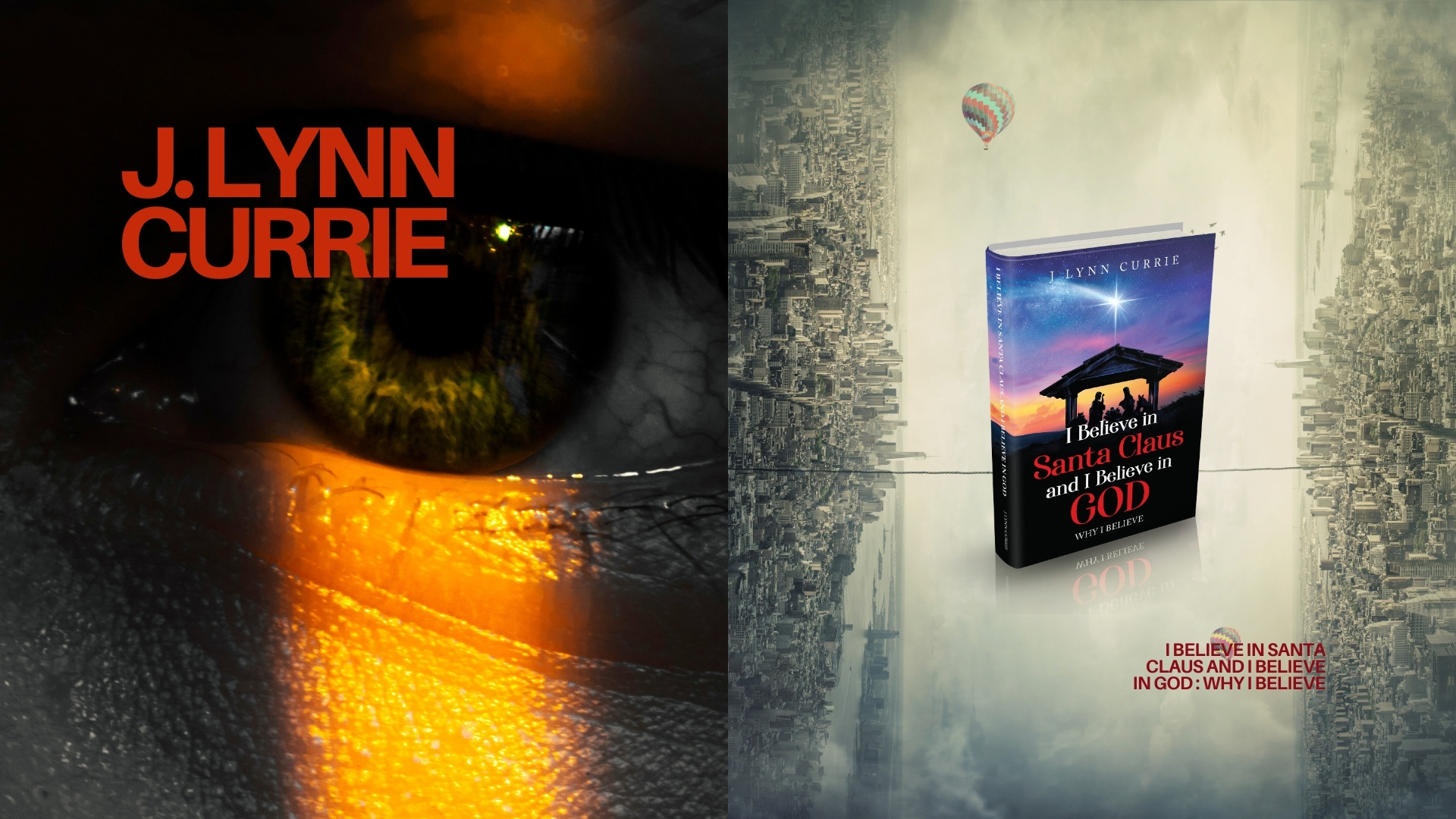
J. Lynn Currie reflects deeply on this tension in I Believe in Santa Claus and I Believe in God. As a child, he once felt betrayed when he discovered Santa Claus was not “real.” Yet, decades later, he still says he believes in Santa, just not as a man sliding down chimneys, but as a symbol of generosity, tradition, and joy. The experience taught him something essential: what we believe and what is real are not always identical, but neither are they completely separate.
The same struggle applies to belief in God. Currie acknowledges that you cannot prove God exists any more than you can prove God does not exist. Instead, belief is a combination of evidence, logic, philosophy, and ultimately, faith. For him, belief in God is not blind. It is as reasonable as disbelief, and in some ways, more satisfying.
But what about reality itself? Here Currie makes a crucial distinction: while our perceptions differ, reality itself is not relative. He illustrates this with a simple example: his wife may say she feels hot while he feels chilly, but the thermometer shows one temperature. The perception differs, but the underlying reality is the same.
In other words, we don’t live in different worlds, we live in the same one, filtered through different lenses. Our senses, our experiences, and our interpretations shape how we encounter reality. Sometimes those filters malfunction: the person who thinks he can fly off a building may truly believe it, but gravity remains gravity. His perception does not alter the laws of physics.
Currie argues that this consistency, this objective order, is what makes science, communication, and daily life possible. We expect a chair to remain a chair tomorrow; we trust that gravity will hold; we assume that reality is stable. Without that foundation, both belief and reason collapse.
And yet, within that shared world, our subjective experiences matter deeply. Awe at a flower, joy in music, or grief in loss, all are filtered perceptions of the same reality. For Currie, such experiences point beyond themselves, acting like trail markers toward something greater: a Creator, a sustaining intelligence, a God who not only set the universe in motion but imbued it with meaning.
So, do we all live in the same world? Yes, Currie insists, we do. But we don’t always see it the same way. Belief is the bridge we build between perception and reality. For some, that bridge leads to God; for others, it stops at doubt. But either way, we are all walking across the same ground.
Purchase I Believe in Santa Claus and I Believe in God: Why I Believe” by J. Lynn Currie via these links:
- Walmart: https://www.walmart.com/ip/I-Believe-in-Santa-Claus-and-I-Believe-in-God-Why-I-Believe-Hardcover-9798893894424/10717607468?classType=REGULAR&from=/search
- Amazon: https://www.amazon.com/Believe-Santa-Claus-God-Why/dp/B0CYSQBDPW
- ARPress – https://authorreputationpress.com/bookstore/i-believe-in-santa-claus-and-i-believe-in-god-why-i-believe/